This week in science, we dissected animals. I dissected a mouse. We opened up their bodies and identified some body parts. We looked at their anatomy and identified its gender. We also had to look up the animals before we started dissecting. We had to get background research on each animal even if we weren't dissecting it.
This week I learned about the different animals we dissected. I also learned new vocabulary. I learned how to tell the sex of an animal. I also learned that to dissect an animal can be very hard. You have to be very careful and gentle when cutting it open because if you cut to deep you can cut everything inside of the animal and you wont be able to analyze it.
My other group in my table dissected a frog and I dissected a mouse. One thing that functions similarly but appeared different would be the skin.My mouse's skin was very smooth, Martinique's frog's skin was very rough. Another would be the size of their legs, my mouse's legs were very small and flexible, and their frogs legs were large rough and hard to move. Lastly would have to be the size of their arms, my mouse's arms were very short and the frogs arms were very long, and its hands were also very and large.
Friday, 10 February 2012

Saturday, 4 February 2012
TWIS #8


We started to study about animals this week.We had to take pictures of both the ventral view and dorsal view. After cutting open our crawfish we took a picture of the internal view. The posterior view was the part of an animal highest to the head. The anterior view was the farthest part from the head. One feature of the crawfish would be the chelipod or claw which is distal urpod. The crawfish environment would have to be the ocean.
I learned disecting is easy, but you need to have patience and you need to be cautious. I also learned working with a partner when disecting makes things easier and less stressful. I also learned chelipod is another word for claw. Its a smarter word. I also learned the crawfish mouth is not on its face its somewhere below where a persons neck would be.
Monday, 23 January 2012
TWIS#7
This week we have been focusing on finishing our project. This week we had to make several slides including the a tundra biome, animals that lived in the biome and what would happen if climate changes occurred. We also had to record our voices and put it in the slides, each person had at least 1 slide in my group.
This week i learned how to record our voices over a slide. I learned how to create slides in google documents. I also learned about the Arctic Tundra. Including what lives in the Arctic Tundra. The climate, and what plants have adapted to live there. I am still unsure about why we had to create animals that have changed if the climate had changed.
This week i learned how to record our voices over a slide. I learned how to create slides in google documents. I also learned about the Arctic Tundra. Including what lives in the Arctic Tundra. The climate, and what plants have adapted to live there. I am still unsure about why we had to create animals that have changed if the climate had changed.
Wednesday, 21 December 2011
Classification Challenge
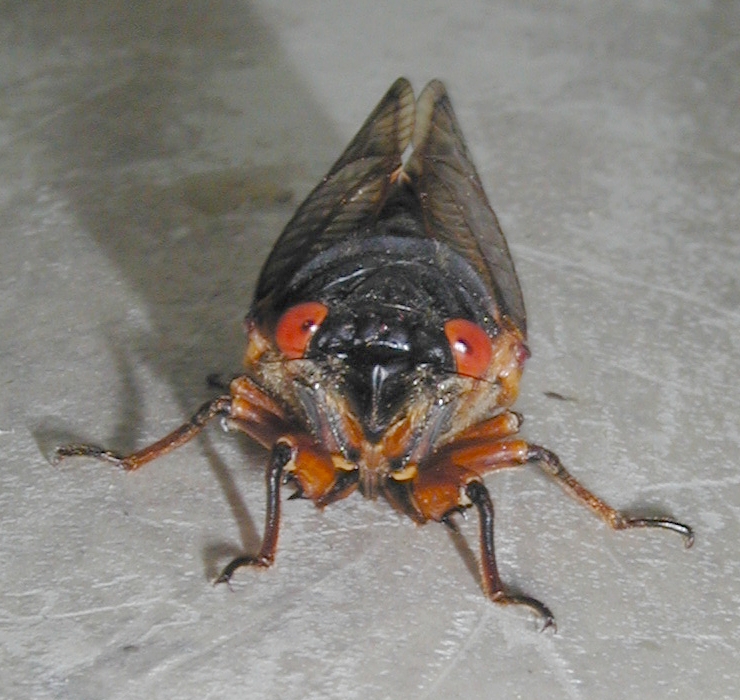 |
| This is a Cicada |
Cicadas have a long proboscis under their head which they inject into plant stems so they can feed on the sap.
They live in tropical climates and there are 2,500 different species of the cicada. Cicadas love to eat liquids from trees and their
herbivores. Their shells are used for traditional medicines in china.
Monday, 12 December 2011
Cricket Investigation
Question: Do crickets prefer light or dark environments? Hypothesis: If I change the amount of light provided in the crickets environment then the side with the most light the crickets will like more because most crickets like light. Background Research: Crickets are omnivores. Most crickets prefer the light, it depends on the type of cricket. Only male crickets chirp. Crickets break down plant materials and they also like sweet liquids. Some things cricket eat include bread crumbs, dead insects plants and fungi.

 | ||
| Our data table |
 | In my data table I drew dots of where the cricket was every 15 seconds. I started off using a different strategy but we changed crickets so i moved on to the strategy of drawing dots. I learned that the cricket liked to be on the top of the tube more than It liked to be in the tube or on the ground. The cricket didn't really move much and. I would say the cricket did like the light more because it never stood in the tube it kept going out of the tube. My hypothesis did support the data because the cricket was in the light more than in the tube. | ||||||||||||||||||||||||||||||||||||||||||||||||||||||||||||||||||||||||||||
| Our cricket investigation picture |
Friday, 9 December 2011
This Week In Science #6
This week in science we continued to work with crickets. We are studying them and learning about them. We started experiments with the crickets. This week we also starting collecting data a couple different. Yesterday we used a different way to collect data and study the crickets. We made 2 different dichotomous keys and every group had different questions to answer on posters.
 THIS PICTURE IS A FLOW CHART STYLE DICHOTOMOUS KEY This week in science in science I learned how to make a dichotomous key. I learned two different styles. There's the flow chart style and the list style. The list style is more easier, It's multiple questions that divide things into groups until each object or animal is in its own group. I learned that these two keys are to clarify things or organize things.
Friday, 2 December 2011
This week in science #5
This week in science we started our 2nd unit. We looked at a lot of videos about animals and their behaviors. We finished our rocket conclusions. We have to do a cover page for our second unit. We observed the crickets this week. We wrote things we noticed and things observed on a chart and drew out a diagram of all the parts of a crickets body.
This week in science I learned the parts of a cricket. I thought that watching the videos was very entertaining. This week I also relearned how to write and complete conclusions for essays. One question I have is, why is our second unit about animal behavior? This week I learned about a rare bird.
 This picture reminded me of the video that we watched about the rare bird in Australia. This is a cute picture!
This week in science I learned the parts of a cricket. I thought that watching the videos was very entertaining. This week I also relearned how to write and complete conclusions for essays. One question I have is, why is our second unit about animal behavior? This week I learned about a rare bird.

Subscribe to:
Posts (Atom)